Many families ask, “Amboseli safari can children walk?” The honest answer is yes, with limits. Amboseli National Park is full of elephants, open sky, and big views. But it is not a playground. You cannot simply open the door and wander. Walking with children near wildlife requires approved areas, the right guide, and a child who can follow rules. This guide explains where walking is allowed, what age makes sense, and how to keep the whole family safe.
Amboseli Safari Can Children Walk Inside the Park?
Children cannot leave a safari vehicle and walk freely inside Amboseli National Park. The main exception is Observation Hill, where visitors may exit for a short, designated walk. Proper walking safaris take place on approved conservancy land outside the park, with an armed or specially trained guide and strict instructions around wildlife.
Amboseli National Park is a protected area managed by Kenya Wildlife Service. The rules are strict for a good reason. The park is home to huge elephant herds, and they are still wild. Buffalo, hippos, and lions also move through the area. A person on foot in the middle of the park is at risk. So the standard rule on a game drive is simple. Stay in the vehicle.
The one place inside the park where getting out is normal is Observation Hill. A short path and steps lead to the top. From there you can see the swamps and often many elephants below. It is not a bush walk. It is a lookout point. Most families can do it, even with small children, but you still need to keep close and walk calmly.
A true walking safari is different. You move through the bush with a trained guide, reading tracks, stopping at animal signs, and listening. That experience is not offered inside the national park. You have to go to a conservancy outside the park boundary.
When people search “Amboseli safari can children walk”, they often mean a guided bush walk. The answer depends on where the walk runs and which operator leads it. The next section covers the places where family walking safaris actually happen.
Where Can Children Take a Walking Safari Near Amboseli?
Family walking safaris are offered on selected conservancies and sanctuaries bordering Amboseli rather than throughout the national park. Potential areas include Kitirua, Tawi, Elerai, Selenkay, and Kimana Sanctuary, where Maasai guides can interpret tracks, plants, insects, and livestock-wildlife relationships. Availability and minimum ages must be confirmed with the camp.
These conservancies are not identical. Kitirua Conservancy borders Amboseli and is used by a number of lodges. Tawi is a private conservancy in the wider Amboseli ecosystem with fewer vehicles. Elerai is a small sanctuary set in acacia woodland near the Tanzanian border. Selenkay is a community conservancy that works with Porini Camp. Kimana Sanctuary is community-managed and protects a wetland that draws elephants and birds.
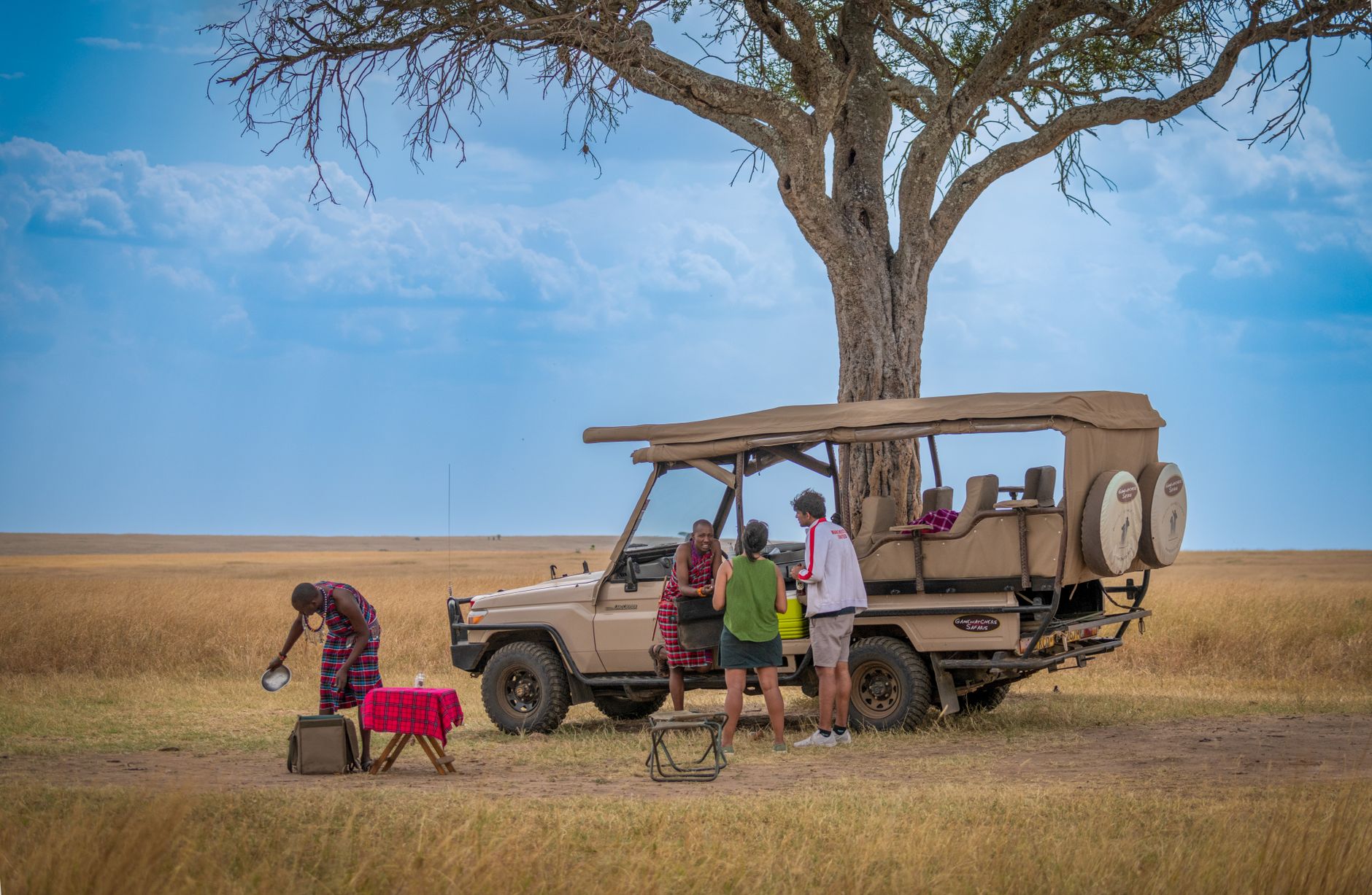
An Amboseli conservancy walk usually lasts one to three hours. The Maasai guide is the heart of the experience. He or she can show you the difference between a lion track and a hyena track, point out a bird nest, explain how acacia thorns defend the tree, and talk about how local herders live alongside wildlife. Children usually remember these lessons better than another hour in the car.
The catch is that not every walk is open to small kids. Some camps set a minimum age. Others say the guide decides on the day. Always confirm the policy with your lodge before you book a conservancy walk.
If you want to plan the rest of the trip at a gentle pace, our easy Amboseli safari planning guide covers the practical details that matter for families and older travelers alike.
What Age Can Kids Join an Amboseli Walking Safari?
There is no single age rule for every Amboseli walking safari. Some family-focused sources describe guided walks for children over 10, while other operators set higher minimum ages for their longer walking programs. Treat 12 as a common planning threshold, then verify the exact camp, conservancy, guide, and route before booking.
Age matters for more than safety. A seven year old may be tall enough, but they may not last on a two hour walk in the heat. A thirteen year old can usually handle a moderate pace, carry water, and stay quiet near elephants. The exact number is less important than the child’s temperament.
The table below compares typical walking options families look at near Amboseli.
| Walking option | Typical minimum age | What to expect |
|---|---|---|
| Observation Hill, inside Amboseli National Park | No published age limit | Short paved path and steps; open to all ages; keep children close |
| Conservancy walks, Kitirua and Tawi | Varies, often 10 to 12 | Open savannah, elephant sightings, Maasai tracks and plants |
| Elerai Conservancy walk | Varies, often 10 to 12 | Acacia woodland, birding, views toward Kilimanjaro |
| Selenkay Conservancy walk | Varies, often 10 to 12 | Community-run area, slower pace, cultural notes |
| Kimana Sanctuary walk | Varies, often 10 to 12 | Wetland edge, elephants, birds, water sounds |
These ages are indicative, not guarantees. Camps change policies and guides make decisions on the day. The safest move is to ask the lodge exactly what is allowed for your child’s age. When families search for a walking safari Amboseli option, they usually end up looking at conservancy walks rather than the park itself.
Is Walking in Amboseli Safe for Children?
Walking can be safe for children when it is an approved, guided conservancy activity and the child can follow instructions instantly, stay quiet, remain with the group, and manage the heat. It is not safe to approach elephants or other wildlife on foot. Guides assess conditions and may cancel or shorten a walk.
Safety on foot comes down to behavior. A guide can handle a surprise elephant sighting if everyone follows the plan. The plan is simple. Children walk between adults or directly behind the guide. They do not run. They do not shout. They stay on the trail. They stop when the guide stops.
Heat is the hidden danger. Amboseli can be very hot, especially in the middle of the day. Most guides schedule walks early in the morning or late in the afternoon. Carry water, wear a hat, and watch for signs of fatigue in your child. If your child is tired, cranky, or thirsty, end the walk early.
Guides also watch the weather and the animals. If a large bull elephant is feeding near the trail, the guide may choose another route. If the grass is too tall for good visibility, the walk may be canceled. A good operator never puts your family at risk just to keep a schedule.
So, are walking safaris safe for children in Kenya? They can be, under the right conditions. But the responsible answer always includes the word “depends”. It depends on the guide, the location, the weather, and your child.
What Can Younger Children Do Instead of a Walking Safari?
Younger children usually have a better experience with short, private game drives, wildlife spotting near camp, supervised nature activities, and a brief visit to Observation Hill. Choose a lodge with family rooms, flexible meal times, and a pool or child program. For children under five, plan around naps and avoid forcing full-day drives.
A game drive is a rolling safari. For many kids under ten, it is the best version of a safari. You stay in the vehicle, which is safe, and you cover more ground. A private Amboseli game drive gives you control. You can stop for a snack, skip a herd of buffalo, or head back early if someone is done.
The daily rhythm works well for families. Go out for two or three hours in the early morning, return to camp for a late breakfast, relax by the pool, then head out again in the late afternoon. Elephants are often visible at the swamps, and you can watch them from the car without moving.
Observation Hill is a good compromise for children who want to stretch their legs inside the park. The short walk is easy, and the view gives a sense of the whole ecosystem. Outside the park, some lodges offer short nature walks around the grounds, Maasai storytelling, or supervised activities. Those can be a better fit than a full bush walk.
For more ideas on picking the right base for your family, our Amboseli safari planning guide covers what to look for in a lodge, from family tents to kids’ activities.
What Do Families Ask About Children Walking in Amboseli?
Can children walk inside Amboseli National Park?
Not freely. Visitors must remain in their vehicles in most of the park, with Observation Hill providing a designated place to get out. Guided walking safaris are generally arranged on neighboring conservancy land instead.
What age can kids join a walking safari in Amboseli?
The minimum age depends on the operator and location. Some walks accept children over 10, while others require participants to be 12 or as old as 16, so families must check the specific camp’s policy before arrival.
Are walking safaris safe for children in Kenya?
They can be safe when led by qualified guides in an approved area and when children can follow instructions immediately. Walking near wildlife without a guide is unsafe, and younger children may be better suited to a private vehicle safari.
Can children go on a game drive in Amboseli?
Yes, children can generally join Amboseli game drives, but lodge and vehicle policies vary. Private vehicles, shorter outings, flexible schedules, and family-friendly camps are especially helpful for children under eight.
What can young children do in Amboseli?
Young children can take short game drives, observe elephants from the vehicle, visit Observation Hill, and join age-appropriate lodge nature activities. Build in naps, pool time, and early meals rather than scheduling long drives every day.
Before you travel, check our Kenya safari cost guide so you can budget entry fees and other trip costs and avoid surprises at the gate.
Where Can You Compare Amboseli Family Safari Options?
The best place to compare Amboseli family options is a lodge by lodge breakdown of walking policies, vehicle sizes, and family rooms, which our Amboseli safari planning guide lays out in one place. Use it alongside the partner marketplaces below to shortlist camps that match your children’s ages and your appetite for walking versus driving.
Where Can You Browse and Compare Amboseli Safari Packages?
Families can browse Amboseli safari packages on partner marketplaces such as FindMySafari, Valley Safaris, and Trunktrails Safaris, alongside SafariPure resources on family trips. Compare each operator’s walking policy, vehicle size, and family room options before you shortlist a camp. The links below are a starting point, not a single recommendation.
- Kenya family safari from SafariPure
- Amboseli National Park guide from Trunktrails Safaris
- Map of Amboseli from Valley Safaris
- Family safari collection on FindMySafari
To make the choice easier, compare safari operators and browse packages that match your family’s needs. Look specifically at the camp’s policy on walking, the size of the vehicle, and the availability of family rooms. Visit FindMySafari, Valley Safaris, or Trunktrails Safaris to see family-friendly Amboseli options side by side, and use our reviews and cost notes to set realistic expectations before you commit.